Sydney Australia Travel Guide: Your Practical East Coast Road Trip Itinerary
Introduction
This Sydney Australia travel guide covers more than just the Harbour City. It’s built around planning a proper East Coast road trip from Sydney up to Cairnsâor at least hitting a few key stops along the way. Whether it’s your first time in Australia or you’re coming back for a deeper look, this guide focuses on practical logistics, realistic timetables, and the kind of local knowledge that actually saves you time and money. We’ll cover routes, costs, timing, and the common mistakes that can turn a good trip into a frustrating one. Think of this as your planning foundation, not a glossy brochure. Let’s get into it.

Why the East Coast Route Makes Sense for Most Travelers
The East Coast drive from Sydney to Cairns is the most popular route for independent travelers in Australia, and for good reason. You get a concentrated dose of the country’s best beaches, national parks, and coastal scenery without the logistical headaches of the outback or Tasmania. The roads are well-maintained, services are frequent, and the distances between major stops are manageable for most drivers.
Compare that to an outback trip, which requires serious prep, usually a 4WD, and tolerance for extreme heat and long, empty stretches. Tasmania is incredible for nature, but it’s a separate trip requiring a ferry or flight, and it lacks the tropical reef and warm water many visitors want.
Who This Route Is Best For
- First-time visitors: You get a solid mix of city life, stunning coastline, and natural wonders like the Great Barrier Reef.
- Nature lovers and beach seekers: You’ll hit iconic beaches, national parks, and marine parks.
- Travelers with two to three weeks: This timeline allows for a comfortable pace without rushing.
- Couples and small groups: Renting a car or campervan is affordable when sharing costs.
Who Might Skip It
- Short-trip travelers (under 10 days): You’re better off basing yourself in Sydney or flying directly to Cairns.
- Luxury travelers seeking seclusion: The East Coast is well-trodden. If you want remote luxury, look at the Kimberley or private island resorts.
Transport Options Overview
You have three main choices: a rental car, a campervan, or the Greyhound bus network. A rental car with budget motels gives you the most flexibility. A campervan saves on accommodation costs but adds driving time and park fees. The bus is cheapest but ties you to a schedule. We’ll break these down in detail later.
Best Time to Visit Sydney and the East Coast: When to Go and When to Avoid
Timing matters on the East Coast because the climate shifts noticeably as you head north. A common mistake is assuming the entire coast has the same weather. It doesn’t.
Sydney and South (Up to Newcastle)
- December to February (Summer): Hot and humid. Beaches are busy, and accommodation prices peak. Best for beach lovers who can handle crowds.
- March to May (Autumn): The sweet spot. Warm days, fewer crowds, and lower prices. Water is still swimmable. Highly recommended.
- June to August (Winter): Cool and often rainy. Whale watching is excellent, but beach weather is unpredictable. Budget travelers will find deals.
- September to November (Spring): Warming up, but can be windy. Good for hiking and outdoor activities before peak season.
Byron Bay, Gold Coast, and Brisbane
- Summer: Hot, humid, and subject to summer storms. School holidays (December to January) are extremely crowded.
- Autumn and Spring: Ideal. Pleasant temperatures, lower humidity, and fewer tourists.
- Winter: Mild and dry. Good for hiking and exploring, but ocean swimming can be cool without a wetsuit. Travelers who need a wetsuit for cooler water will find it useful in these months.
Cairns and Tropical North Queensland
- May to October (Dry Season): The best time. Low humidity, blue skies, and comfortable temperatures. Ideal for reef trips and hiking. This is peak season, so book well in advance.
- November to April (Wet Season): High humidity, frequent rain, and the risk of cyclones. Some tours don’t run, and stinger jellyfish are in the water (requiring stinger suits). The only upside is lower prices and fewer crowds.
Recommendations
- For budget travelers: Travel in April, May, September, or October. You avoid peak rates in Sydney and the dry season premium in Cairns.
- For comfort: Travel from March to May or September to November. You get good weather in Sydney and the southern coast, and you can time the north for the dry season if you’re going all the way.
Getting There: Flights, Airports, and Arriving in Sydney
Most international visitors fly into Sydney Kingsford Smith Airport (SYD). It’s well-connected to the city center by train, taxi, and rideshare.
Airport Transfer Options
- Airport Link Train: The fastest and most reliable option. Runs every few minutes to Central Station ($170-$200 AUD one way). Avoid peak hour if you have a lot of luggage.
- Taxi: Expect to pay $50-$75 AUD to the CBD depending on traffic. Use the designated taxi rank rather than flagging one on the curb after a long flight.
- Rideshare (Uber, Didi): Often $10-20 cheaper than a taxi, but surge pricing can wipe out savings. Pre-book if possible.
- Private Transfer: Good for groups or families. Can be arranged through your accommodation for a flat fee.
- What to avoid: On busy days, the taxi queue can be 30 minutes long. The train is almost always faster.
Visas
Most nationalities need an ETA (Electronic Travel Authority) or eVisitor visa. Apply online before you travel. It’s straightforward. Don’t wait until the airport.
Sydney Itinerary: 3-Day Plan That Hits the Essentials
A 3-day Sydney itinerary covers the highlights without burning out. The key is pacing. A common mistake is trying to see everything in one day, which leads to exhaustion and missed details.
Day 1: The Icons
- Morning: Start at Circular Quay. Walk around the Opera House (you don’t need a tour unless you want the backstage history). Walk across the Sydney Harbour Bridge using the pedestrian path. It’s free and offers great views.
- Lunch: Grab a quick bite in The Rocks. Avoid the overpriced tourist cafes on the main strip; head a few streets back for better value.
- Afternoon: Take a ferry from Circular Quay to Manly. The ferry ride alone is worth the fare. Walk the Manly to Spit Bridge coastal walk if you have energy, or just relax on the beach.
- Evening: Dinner in Darlinghurst or Surry Hills. Good food, local vibe.
Day 2: Beaches and Coogee
- Morning: Take the bus to Bondi Beach. Walk the Bondi to Coogee coastal walk (about 1.5 hours). It’s stunning and takes you past several smaller beaches.
- Lunch: Grab fish and chips at Coogee or a casual meal in Bondi. For longer walks, a reusable water bottle is worth bringing to stay hydrated along the coast.
- Afternoon: Visit the Bondi Icebergs pool for a swim or just photos. Then head to the Royal Botanic Garden in the late afternoon for a relaxing walk.
Day 3: Choice Day
- Option A (Culture): Spend the morning at the Art Gallery of NSW or the Australian Museum. Both are excellent and often free for general exhibitions.
- Option B (Day Trip): Take a train to the Blue Mountains (about 2 hours). See the Three Sisters, do a short bushwalk, and head back. This is a full day.
- Option C (Harbor Cruise): A self-narrated harbour cruise or a dedicated tour like a small-group sailing trip. These can be booked online in advance for convenience.
Getting Around
Buy an Opal card at any convenience store or the airport train station. Tap on and off for trains, buses, ferries, and light rail. It’s the cheapest and easiest option.
Monetization Note
For convenience, consider booking a Sydney combo pass like the iVenture card if you plan on several paid attractions. For the harbour cruise, a reputable operator is a safe choice.
Getting Out of Sydney: Campervan vs. Rental Car vs. Bus
Once you’re done with Sydney, you need to decide how to travel north. Each option has real tradeoffs.
Rental Car
- Best for: Couples and small groups who want flexibility and don’t mind booking motels.
- Pros: Freedom to stop anywhere, faster travel times, comfortable.
- Cons: Accommodation costs add up, parking fees in cities, tolls around Sydney.
- Cost: Expect $50-$100 AUD per day for a standard car, plus fuel ($150-$250 for the entire East Coast drive depending on your route).
- Tip: Book in advance, especially during school holidays. Check for one-way rental fees if dropping off in Cairns.
Campervan
- Best for: Budget-conscious travelers, families, and those who like the idea of self-contained accommodation.
- Pros: You have your bed and kitchen with you. Saves on motel costs. Fun for the right kind of traveler.
- Cons: Slower driving, need to book holiday parks in advance during peak season, fuel consumption is higher, and you need to be comfortable with smaller living spaces.
- Cost: $100-$200 AUD per day for the van, plus around $30-50 per night for a powered site. Total cost can rival budget motels when you factor in van rental, fuel, and park fees.
Greyhound Bus
- Best for: Solo travelers on a tight budget who don’t want to drive.
- Pros: Cheapest option, no driving stress, can sleep on the bus.
- Cons: Fixed schedule, less flexibility, limited stops, and you’re tied to bus stations.
- Cost: Around $300-$500 AUD for a 14-day pass covering most stops.
Recommendation
For most travelers, a rental car booked through a reputable site offers the best balance of cost, flexibility, and comfort. Campervans are overrated unless you’re specifically seeking that lifestyle. Buses work for solo budget travelers who value savings over freedom.
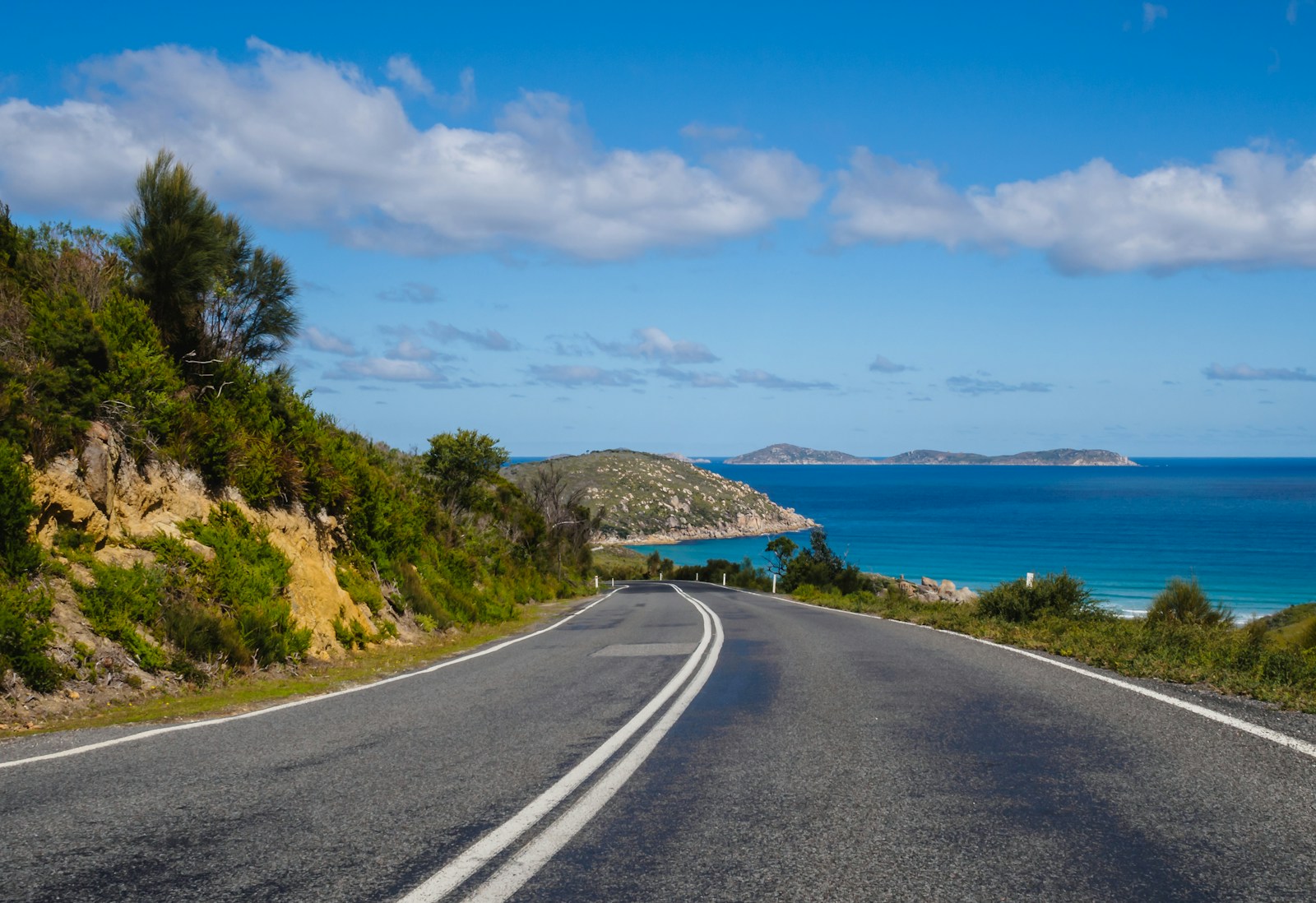
The East Coast Road Trip: Stops from Sydney to Cairns
Here are the key stops along the route from Sydney to Cairns. Each one has a compelling reason to visit.
Port Stephens
- Why stop here: It’s a quieter alternative to Byron Bay. Excellent for sand dunes, dolphin watching, and surfing without the crowds.
- Best activity: A sandboarding tour at Stockton Bight Sand Dunes.
- Common mistake: Skipping it entirely because Byron Bay is more famous. For a more relaxed start, Port Stephens is a better first stop.
Byron Bay
- Why stop here: The quintessential Australian beach town. The lighthouse, the surf, and the laid-back vibe are iconic.
- Best activity: Climb the Cape Byron Lighthouse for sunrise. It’s busy but worth it.
- Common mistake: Thinking you can just show up and find a cheap hostel. Book accommodation weeks in advance, especially in summer.
Gold Coast
- Why stop here: Theme parks, surf breaks, and a flashy high-rise skyline. It’s a different kind of Australian experience.
- Best activity: Surfing at Snapper Rocks or a day at one of the major theme parks if you have kids.
- Common mistake: Underestimating the sprawl. Everything is spread out, so you need a car or Ubers.
Brisbane
- Why stop here: A relaxed city with a great food scene, the South Bank parklands, and excellent access to the coast.
- Best activity: Walk along the Brisbane River, visit the Queensland Art Gallery, and eat at the Eat Street Northshore markets.
- Common mistake: Dismissing it as just a transit hub. Brisbane deserves at least a day.
Sunshine Coast
- Why stop here: Less developed than the Gold Coast, with beautiful beaches like Noosa and the hinterland national parks.
- Best activity: A hike in Noosa National Park followed by a swim at Alexandria Bay.
- Common mistake: Only hitting the beach and missing the hinterland, which has waterfalls and rainforest walks.
The Whitsundays
- Why stop here: The best sailing and island experience on the East Coast. The view from Hill Inlet at Whitehaven Beach is world-class.
- Best activity: A one-day or overnight sailing tour that includes snorkeling and the lookout.
- Common mistake: Not booking a tour in advance. They sell out days ahead in peak season.
Cairns
- Why stop here: The gateway to the Great Barrier Reef and the Daintree Rainforest.
- Best activity: A full-day reef trip that includes snorkeling or a scenic flight over the reef.
- Common mistake: Thinking you can do a reef trip and Daintree in one day. They are 2-3 hour drives apart. Plan two separate days.
Accommodation Strategy: Where to Stay and What to Pay
Accommodation along the East Coast ranges from budget hostels to high-end resorts. Here’s what to expect for a mid-range traveler.
- Hostels: $30-$50 AUD per night for a dorm bed. Common in Byron Bay, Brisbane, and Cairns. Good for solo travelers but not always cheapest once you add a private room.
- Motels: $80-$150 AUD per night for a basic double room. Reliable, private, and widespread. This is the standard choice for most road-trippers.
- Holiday Parks: $30-$50 AUD for a powered site (campervan or tent), $100-$200 AUD for a cabin. Good for families and campervan users.
- Budget Hotels: $120-$200 AUD per night. Often worth the upgrade for comfort and location, especially in Sydney and Cairns.
Tips
- Book in advance for peak season (December-January in Sydney, May-October in Cairns).
- Last-minute deals are possible in shoulder season, but risk is high if you’re set on a specific location.
- Don’t assume hostels are always the cheapest. A budget motel can be similar in price for more privacy.
Money Matters: Budgeting for a 2-Week East Coast Trip
Here’s a realistic daily budget breakdown for a 2-week trip from Sydney to Cairns.
Low Budget (Solo traveler, hostel dorms, public transport)
- Accommodation: $35
- Food: $40
- Transport (fuel split/ bus): $20
- Activities: $20
- Total: $115 AUD per day
Mid Budget (Motels, rental car, mix of activities)
- Accommodation: $120
- Food: $70
- Transport (fuel, tolls, rental): $50
- Activities: $40
- Total: $280 AUD per day
High Budget (Nice hotels, tours, fine dining)
- Accommodation: $250
- Food: $120
- Transport (rental car and tolls): $60
- Activities: $100
- Total: $530 AUD per day
Hidden Costs to Watch For
- Tolls: Sydney has several toll roads. A rental car will likely have a toll pass. Ask the provider.
- National Park Fees: Many beaches and lookouts are free, but some parks charge entry ($10-20 per vehicle).
- Parking: In Sydney and Brisbane, parking can be $30-50 per day. Plan ahead.
- Fuel: From Sydney to Cairns is about 2,500km. At 10km/L, you’ll need 250L of fuel. At $1.80/L, that’s $450 AUD. Don’t underestimate this.
Top 5 Mistakes Travelers Make on the East Coast (And How to Avoid Them)
- Mistake 1: Driving too far in one day. The East Coast looks compact on a map, but traffic and winding roads eat into time. Limit driving to 4-5 hours per day. Plan for stops.
- Mistake 2: Skipping sunscreen. Australian sun is brutal even on cloudy days. You’ll burn in 15 minutes. Use reef-safe sunscreen and reapply.
- Mistake 3: Ignoring the wet season in Cairns. If you’re a budget traveler, November to April might seem tempting, but many tours don’t run, and the rain is constant. Go during the dry season.
- Mistake 4: Not booking Whitsundays tours early. The best sailing trips and Hill Inlet tours sell out fast, especially in the dry season. Book at least 2-3 weeks in advance.
- Mistake 5: Overpacking for diverse climates. You’ll need swimwear and a light jacket in the same trip. Pack layers and wash clothes. Leave heavy winter coats and formal shoes behind.
Great Barrier Reef or Whitsundays: Which Experience is Right for You?
Both are incredible, but they offer different experiences.
Cairns Reef Trip
- Best for: Serious snorkelers and divers who want to see the outer reef and a variety of marine life.
- Time: Full day (8+ hours) to get to the outer reef, snorkel, and return.
- Cost: $200-$350 AUD per person.
- Experience: A large catamaran takes you to a pontoon or multiple reef sites. You get gear, lunch, and sometimes a glass-bottom boat tour. Can be rough for seasickness.
- Weather: Best from May to October. Summer can be stormy.
Whitsundays Sailing Trip
- Best for: Those who want a mix of sailing, island exploration, and reef snorkeling in a more scenic setting.
- Time: One day or overnight. One day is enough to see Hill Inlet and snorkel.
- Cost: $150-$250 AUD per person for a day trip.
- Experience: You sail among the islands, visit Whitehaven Beach, and snorkel in fringing reefs. The scenery is stunning.
- Weather: Also best from May to October.
Reality Check
If you’re prone to seasickness, choose the Whitsundays day trip, as the water is calmer in the sheltered bays. Cairns outer reef trips can be very rough. Also, the Whitsundays reef is more accessible but not as diverse as the outer reef.
Who Should Go Where
- Strong snorkelers/divers: Cairns.
- Scenery lovers and first-time sailors: Whitsundays.
- Budget constraints: Whitsundays day trip is cheaper than a full Cairns reef trip.
- Time constraints: Whitsundays day trip is shorter. Cairns requires a full day.
Packing for the East Coast: What You Actually Need
Pack light. You can buy anything you need in Sydney, but here’s what will save you hassle.
Essential Items
- Lightweight quick-dry clothes: You’ll be washing clothes frequently. Synthetic blends dry fast.
- Reef-safe sunscreen: Available in Australia, but bring your own if you have a specific brand.
- Power adapter (Type I): Australia uses a unique three-prong plug. Get one before you arrive. A Australia power adapter is a simple thing to pick up beforehand.
- Reusable water bottle: Tap water is safe to drink in cities. Stay hydrated.
- Daypack: For beach days, walks, and ferry trips. A 20-30L pack is ideal.
- Hat and sunglasses: The sun is intense.
- First-aid kit: Include band-aids, antiseptic, and motion sickness tablets for the reef trip.
What to Leave Behind
- Dress shoes and heavy jackets: You won’t need them unless you’re visiting in winter (June-August) in Sydney.
- Too many gadgets: A camera and phone are enough. Leave the drone if you’re not sure about permits.
Local Availability
You can buy sunscreen, insect repellent, and basic toiletries in any supermarket in Sydney. Don’t bring a months supply.

Final Tips from a Local Travel Agent
After years of helping travelers plan their East Coast trips, I want to leave you with a few insider pieces of advice.
- Use a toll pass in Sydney: If you rent a car, make sure it includes a toll pass. Getting caught without one is expensive.
- Avoid the tourist traps in The Rocks: The main square is overpriced. Walk a few streets back to find better cafes and restaurants that locals actually use.
- Free things in Brisbane: The South Bank Parklands have a free swimming lagoon, art galleries are free, and the City Botanic Gardens are a great place for a picnic.
Planning a trip like this can feel overwhelming, but it doesn’t have to be. If you want a custom itinerary that saves you time and money, we’re here to help.
Ready to plan your Sydney and East Coast adventure? Get in touch for a custom itinerary that takes the stress out of logistics.