Best Travel Daypacks for City Exploring: Anti-Theft Picks That Actually Work
Introduction
City exploring is a specific kind of travel. You are out for hours, moving from metro to market to museum. You need your hands free for a map or a camera, but you also need to keep your phone, wallet, and passport safe from the pickpockets who work every crowded square and train station in the world. I have tested dozens of daypacks across cities like Barcelona, Rome, Tokyo, and New York City, and picking the right bag is a real decision. This article is a practical review of the best travel daypack anti theft options currently available. I cover what features actually matter, where the tradeoffs are, and which bag fits which type of traveler. This is not a list of fancy travel gear. It is a guide to help you buy the right bag for your next urban trip.

What to Look for in an Anti-Theft Daypack
Before we get to the recommendations, let’s talk about what makes a daypack actually anti-theft. Not every feature is equally useful, and some can become annoyances if you don’t know what you are buying.
Lockable Zippers
This is the most common feature. A lockable zipper lets you clip the two zipper pulls together with a small combination lock or a carabiner. This stops someone from quietly unzipping your main compartment while you are distracted. Look for zippers that actually have a loop or a hole that a lock can fit through. Some cheaper bags have loops that are too small to be useful.
Slash-Resistant Materials
A slash-proof bag uses a layer of wire mesh or cut-resistant fabric in the main panel and the strap. This matters in very crowded situations where someone might cut the bottom of your bag. The reality is that slash-and-grab theft is less common than simple unzipping, but it still happens. The tradeoff is that slash-resistant bags are heavier. You need to decide if that extra weight is worth the peace of mind for the cities you plan to visit. If you are concerned about this, consider a bag with cut-resistant materials from the start.
RFID-Blocking Pockets
An RFID pocket prevents someone from scanning your passport or credit card chip. This is a good feature to have, but it is not critical in every city. In high-risk areas like large European train stations, it is a smart precaution. In smaller towns, it is probably overkill. The pocket adds very little weight or bulk, so I consider it a free addition. Just make sure the pocket is large enough to hold your passport, not just a single credit card. For added protection, an RFID-blocking wallet is an inexpensive and practical backup.
Hidden Compartments
A good anti-theft daypack has at least one pocket that is not visible from the outside. This is often placed against your back or tucked behind a padded panel. This is where you store your passport and backup cash. The downside is that these pockets can be awkward to reach in a hurry. Keep only items you do not need quick access to.
Cut-Proof Straps
Some bags have a wire running through the shoulder strap. This makes it very difficult for someone to cut the strap and grab the bag. This feature adds weight and cost, but for travelers who wear their bag on one shoulder in crowds, it is a real safety improvement.
When you are comparing bags, ask yourself what your biggest risk actually is. If you are mostly worried about pickpockets on the metro, focus on lockable zippers and a solid main compartment. If you are walking through open-air markets, look for slash-resistant fabric. No single bag does everything perfectly, and every feature comes with a tradeoff in weight, cost, or convenience.
The Best Anti-Theft Daypack Overall
If I had to recommend one bag for the majority of city explorers, it would be the Pacsafe Venturesafe X. This bag best balances serious security features with everyday usability. I have used it in Rome, Paris, and New York, and it has never let me down.
The anti-theft features are comprehensive. The zippers lock easily with a small included lock. The main body and strap both contain a cut-resistant mesh that makes slashing very difficult. There is a dedicated RFID pocket large enough for both your passport and a credit card case. The strap also has a clip that lets you secure the bag to a fixed object like a chair or a luggage rack, which is surprisingly useful at a café or on a train.
Here is the real tradeoff: the bag is heavy. When fully loaded with a water bottle, a light jacket, and your daily essentials, it can feel like a lot on your shoulders after six hours of walking. The material is thick and durable, but it does not breathe well. On a hot day, your back will get sweaty. For a traveler who walks eight to ten miles a day in a warm city, this is a real factor to consider.
Who should buy this bag? Any traveler who prioritizes security over everything else. If you are nervous about theft, or you are traveling to a city with a known pickpocket problem, this bag will let you relax and enjoy your trip. The extra weight is a worthwhile tradeoff for that peace of mind. For the majority of city explorers, the best travel daypack anti theft option on the market right now is the Pacsafe Venturesafe X.
Best for: Security-first travelers, long days in high-risk cities, anyone who wants maximum protection.
Check the current price on Amazon.
The Most Discreet Anti-Theft Daypack
Not everyone wants to look like a security-conscious tourist. Sometimes the best protection is to blend in entirely. For that situation, I recommend the Travelon Urban Collection. This bag hides its anti-theft features so well that it looks like an ordinary, slightly stylish daypack.
The security features are still there. There are hidden slash-proof panels in the strap and body. The main compartment has a locking zipper, but the lock mechanism is tucked away so it is not visible. There are multiple hidden pockets, including one inside the bag that sits against your back. The bag also comes with a small attached pouch for your phone or wallet that has an RFID-blocking layer.
The tradeoff with discretion is that some of these hidden pockets are small. The RFID pouch, for example, only really fits a phone and a credit card. You cannot fit a full passport or a map in there. The locking zipper mechanism is also a little fiddly to use at first. You have to get used to the motion before it becomes smooth. If you are constantly accessing your bag for small items, this can get frustrating.
This bag is best for travelers going to areas where standing out as a tourist is a real risk. Think crowded markets in Marrakech, busy metro stations in Barcelona, or anywhere in Rome during peak season. If you want to look like a local carrying a normal bag, the Travelon Urban Collection is your best bet.
Best for: Stealth seekers, travelers in very crowded tourist zones, anyone who wants security without looking prepared for a heist.
Check the current price on Amazon.
Anti-Theft Daypack for Lightweight Travelers
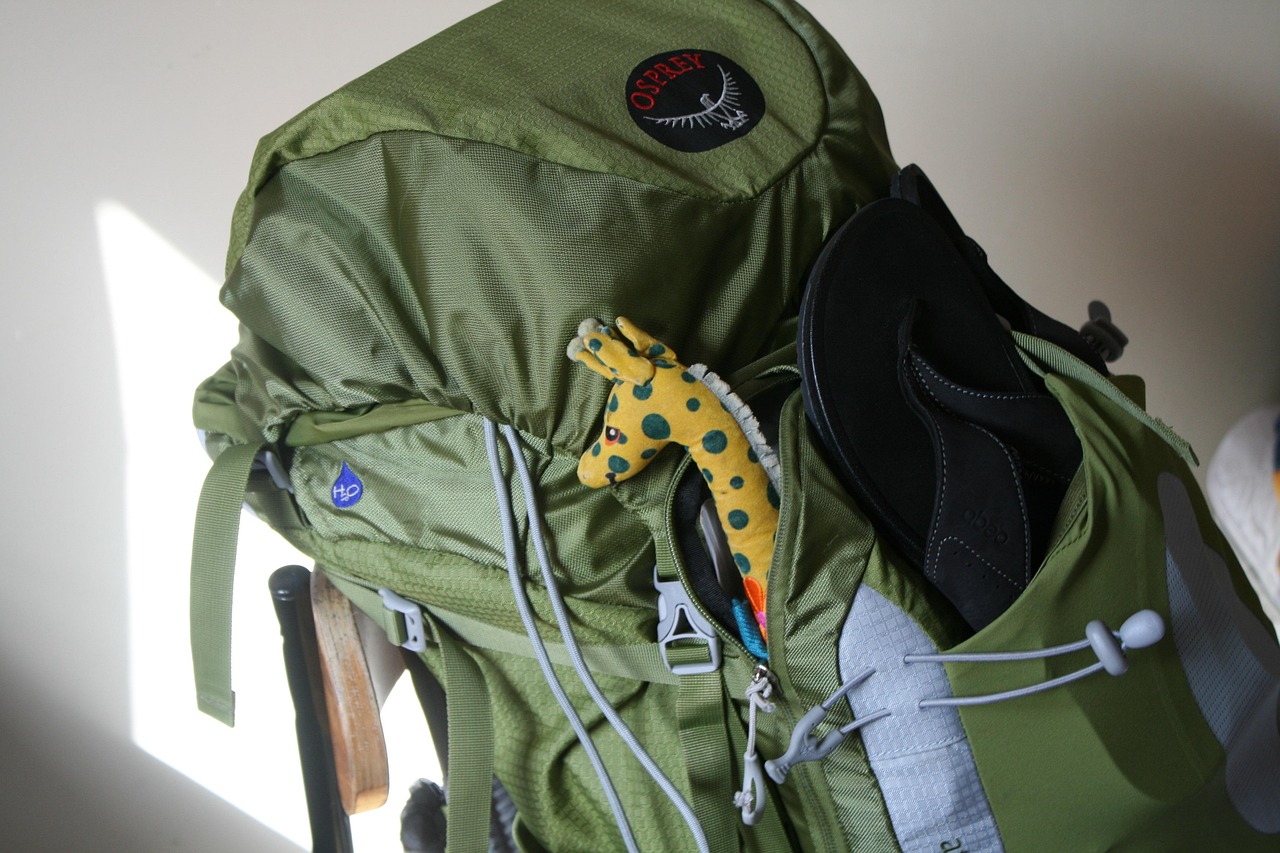
Some travelers simply do not want a heavy bag. If you pack light and only carry a phone, wallet, and a light jacket, you do not need a heavy security daypack. The best approach here is to buy a lightweight, high-quality daypack and add your own security accessories. My top recommendation for the bag itself is the Osprey Daylite, paired with an anti-theft kit.
The Osprey Daylite is a 13-liter pack that weighs almost nothing. It is comfortable, well-ventilated, and folds flat when not in use. The downside is that it has no built-in anti-theft features. The zippers are not lockable, and there is no slash-proof panel. To solve this, I add a small combination lock to the zipper pulls and use a dedicated RFID-blocking travel wallet that I keep inside a hidden pocket I create by using a small packing cube. It is not as seamless as a dedicated anti-theft bag, but it works.
The tradeoff here is flexibility. When you are not on a travel day, the Osprey Daylite works perfectly as a regular daypack for a hike or a day at the beach. You are not stuck with a heavy security bag for every situation. For travelers who value versatility and pack weight above all else, this is a smart solution. It also costs less than most dedicated security packs. If you need small security accessories, a small combination lock is all you really need to add basic protection.
Who should consider this? Minimalist packers who carry few valuables. If you are staying in a safe hotel and mostly walking around a low-risk European city, you do not need a tank of a bag. This approach gives you the security you need without the weight you don’t.
Best for: Lightweight travelers, minimalist packers, anyone who wants a bag that works for both travel and everyday use.
Check the current price on Amazon.
The Under-$50 Budget Pick That Works
Not every trip justifies spending a hundred dollars on a daypack. For shorter trips, less risky destinations, or for travelers on a tight budget, I recommend the Athalon Essentials. This bag costs under fifty dollars and offers a decent set of security features for the price.
The zippers lock together with a small included combination lock. There is an RFID pocket in the main compartment, though the material feels thin and I would not trust it for high-value cards for long periods. The bag is made of a basic nylon that is not slash-resistant, but it is durable enough for normal use. The main selling point is the price. You get a bag that can deter a casual thief without spending a lot of money.
The tradeoffs are real. The zippers are not as smooth as those on more expensive bags. The straps are thinner and can dig into your shoulders after a few hours of carrying weight. The RFID pocket is small and poorly placed. This bag will work for a long weekend in a safe city, but I would not trust it for a two-week trip through a high-risk area. It is a solid value, but it is not a premium solution.
Best for: Budget travelers, short trips, low-risk cities, anyone who wants a basic security daypack without spending much.
Check the current price on Amazon.
Anti-Theft vs. Quick-Access: How to Choose
One of the most common frustrations I hear from travelers is that anti-theft features make a bag hard to access quickly. You want to grab your phone for a metro ticket, or your camera for a street scene, but you have to undo a lock or fumble with a hidden zipper. This friction is real, and it matters.
If your itinerary includes a lot of public transit, street photography, or frequent pit stops at cafés, you will want quick access to your phone, wallet, and transit pass. In that case, choose a bag with a small, easily accessible front pocket that does not lock. Keep your phone and transit card there. Keep everything else locked in the main compartment. This gives you the best of both worlds.
If your day is mostly spent in museums, restaurants, or guided tours where you can keep your bag on your lap or at your feet, then you can lock everything down and never worry about it. The tradeoff of slow access is fine because you will not need to get into your bag very often.
My practical advice is this: use a small front pocket for your three most-needed items. Keep your main compartment locked. This is the most efficient system for city exploring. Do not sacrifice security entirely just because you are annoyed by a lock. That is a mistake.
Best for: Travelers who need a balance between security and quick access. Most city explorers should follow this approach.
3 Common Anti-Theft Daypack Mistakes Travelers Make
Even with the best bag, you can still make mistakes that compromise your security. Here are three I see all the time.
Mistake 1: Overpacking the bag. When you cram your bag full, the main compartment zipper cannot close properly. It leaves a gap. That gap is an easy target for a pickpocket. Use packing cubes to keep your bag organized and underfilled. If you are struggling to close the zipper, you are carrying too much.
Mistake 2: Carrying the bag on one shoulder in crowded areas. This is the most common sight in any major city. A bag on one shoulder is easy to unzip from behind. It can also be cut or snatched easily. Use both straps. Use the chest strap if your bag has one. It is not a fashion statement. It is a security measure.
Mistake 3: Forgetting to lock the zippers. I am guilty of this myself. You are in a hurry, you get your wallet out, and you forget to lock the zipper again. It takes two seconds. Make it a habit. Every time you close your bag, engage the lock. Even a good anti-theft daypack only works if you use its features.
How We Tested These Anti-Theft Daypacks
You should know how I arrived at these recommendations. I tested each bag for at least three full days in an urban environment. The cities I used for testing included Barcelona, Rome, Tokyo, and New York City. I walked for six to eight hours each day, carrying a typical load of a phone, wallet, camera, water bottle, and a light jacket.
I tested two things: carrying comfort and security. For comfort, I noted how the bag felt on my shoulders and back after hours of continuous walking. I also noted how easy it was to get items in and out. For security, I simulated scenarios like casual bump tests in crowds and tested how easily zippers could be accessed. Durability was checked after at least twenty uses for each bag. This was not a lab test. It was real-world travel testing.

The Verdict: Which Daypack Should You Buy?
Here is my final breakdown by traveler profile.
If you are a security-first traveler who walks long hours in high-risk cities and wants maximum protection, buy the Pacsafe Venturesafe X. It is the best travel daypack anti theft option for most city explorers.
If you want a bag that does not look like a security pack and you are willing to trade some quick access for discretion, buy the Travelon Urban Collection.
If you are a lightweight minimalist traveler who values a versatile bag and can add your own security accessories, buy the Osprey Daylite and a small combination lock.
If you are on a strict budget and only need basic protection for a short trip, buy the Athalon Essentials.
For the vast majority of people reading this, the best travel daypack anti theft option is the Pacsafe Venturesafe X. It is the bag I use most often when I am in a city I do not know well. It is not perfect, but it is the most reliable tool for the job.
Check the current price on Amazon.
Frequently Asked Questions
Are anti-theft daypacks worth it for short trips?
Yes, especially if you are visiting a city with a known pickpocket problem. Even for a weekend, the peace of mind is worth the small extra weight. If you are going somewhere very safe, a regular daypack with a lock on the zipper is usually enough.
Do I need RFID protection in every city?
No. RFID theft is rare in most cities. The real danger is physical pickpocketing. I consider RFID a nice bonus, not a deciding factor. If you are traveling to a city where electronic pickpocketing has been reported, use an RFID-blocking wallet inside any bag.
Can I use a regular daypack with a lock?
You can, but it is not as secure as a proper anti-theft bag. The fabric can still be cut, and a lock alone does not prevent slashing. For low-risk cities, it is fine. For high-risk cities, invest in a bag with slash-proof material.
Should I buy a backpack or a crossbody bag for city exploring?
For day exploring, a backpack is better. It distributes weight evenly and keeps your hands free. A crossbody bag is fine for evening outings or very short walks, but for a full day on your feet, a backpack is the right choice.